
Pediatric Blood Draw Guidelines
Pediatric Blood Draw Guidelines - Web the web page does not contain any information about pediatric blood draw guidelines. For serum or plasma, draw approximately 2 1/2 times the requested volume. Web appropriate maximum phlebotomy volumes. Selection of a site for capillary sampling in a paediatric patient is usually based on the age and weight of the patient. Web body wt (kg) body wt (lbs) total blood volume (ml) maximum allowable volume (ml) in one blood draw ( = 2.5% of total blood volume) total volume (clinical + research). If the child is walking, the. This chapter covers background information (section 6.1), practical guidance (section 6.2) and illustrations (section 6.3) relevant to paediatric and neonatal blood. It summarizes the aap's updated recommendations for various screenings. Web learn how to collect blood samples from children safely and effectively, following clsi's standard gp41. Provide pediatric maximum blood volume guidelines for both inpatient and out patient phlebotomists. Web users of these guidelines should read chapters 2 and 3 before reading the information given below. Web this chapter covers all the steps recommended for safe phlebotomy and reiterates the accepted principles for blood drawing and blood collection (31). It summarizes the aap's updated recommendations for various screenings. The table below provides guidance for clinical researchers and reb reviewers for assessing the risk level associated with total. Web maximum allowable total blood draw volumes in children. Web the web page does not contain any information about pediatric blood draw guidelines. Web pediatric blood volume draw guidance. For serum or plasma, draw approximately 2 1/2 times the requested volume. If the child is walking, the. Obtaining donor blood for organ packaging causes instability in pediatric donors in the icu and the or. Web existing guidelines specify paediatric blood sample volume limits ranging from 1% to 5% of total blood volume (tbv) over 24 hours and up to 10% of tbv over 8. Web the web page does not contain any information about pediatric blood draw guidelines. Web this chapter covers all the steps recommended for safe phlebotomy and reiterates the accepted principles. Web users of these guidelines should read chapters 2 and 3 before reading the information given below. The below blood volume limits include blood drawn for both clinical and research purposes, e.g., if. This chapter covers background information (section 6.1), practical guidance (section 6.2) and illustrations (section 6.3) relevant to paediatric and neonatal blood. Web the web page does not. Web existing guidelines specify paediatric blood sample volume limits ranging from 1% to 5% of total blood volume (tbv) over 24 hours and up to 10% of tbv over 8. Web paediatric and neonatal patients. Selection of a site for capillary sampling in a paediatric patient is usually based on the age and weight of the patient. Web this chapter. Web body wt (kg) body wt (lbs) total blood volume (ml) maximum allowable volume (ml) in one blood draw ( = 2.5% of total blood volume) total volume (clinical + research). Web learn how to collect blood samples from children safely and effectively, following clsi's standard gp41. Web following the proper pediatric blood draw guidelines and procedures is crucial to. Web following the proper pediatric blood draw guidelines and procedures is crucial to ensure accurate test results while minimizing pain and distress for young. The table below provides guidance for clinical researchers and reb reviewers for assessing the risk level associated with total. Web body wt (kg) body wt (lbs) total blood volume (ml) maximum allowable volume (ml) in one. Web time to conduct the draw, the cost of equipment to do the draw, and inflexibility to verify or add to the original order without resticking the patient increase at each tier. Web learn how to collect blood samples from children safely and effectively, following clsi's standard gp41. Web pediatric blood volume draw guidance. Web users of these guidelines should. It summarizes the aap's updated recommendations for various screenings. Web pediatric blood volume draw guidance. Web existing guidelines specify paediatric blood sample volume limits ranging from 1% to 5% of total blood volume (tbv) over 24 hours and up to 10% of tbv over 8. Selection of a site for capillary sampling in a paediatric patient is usually based on. It summarizes the aap's updated recommendations for various screenings. For serum or plasma, draw approximately 2 1/2 times the requested volume. To provide a guideline for performing safe phlebotomy procedures on our neonate, infant and pediatric. Web paediatric and neonatal patients. Web this chapter covers all the steps recommended for safe phlebotomy and reiterates the accepted principles for blood drawing. Web the web page does not contain any information about pediatric blood draw guidelines. Web time to conduct the draw, the cost of equipment to do the draw, and inflexibility to verify or add to the original order without resticking the patient increase at each tier. Web appropriate maximum phlebotomy volumes. The below blood volume limits include blood drawn for. Web body wt (kg) body wt (lbs) total blood volume (ml) maximum allowable volume (ml) in one blood draw ( = 2.5% of total blood volume) total volume (clinical + research). Obtaining donor blood for organ packaging causes instability in pediatric donors in the icu and the or. Reassess the appropriateness of care guidelines as condition changes and 24 hrs.. It summarizes the aap's updated recommendations for various screenings. Provide pediatric maximum blood volume guidelines for both inpatient and out patient phlebotomists. Donorconnect pediatric blood draw guideline. Web users of these guidelines should read chapters 2 and 3 before reading the information given below. This chapter covers background information (section 6.1), practical guidance (section 6.2) and illustrations (section 6.3) relevant to paediatric and neonatal blood. Web this chapter covers all the steps recommended for safe phlebotomy and reiterates the accepted principles for blood drawing and blood collection (31). Web existing guidelines specify paediatric blood sample volume limits ranging from 1% to 5% of total blood volume (tbv) over 24 hours and up to 10% of tbv over 8. Find out which comfort techniques phlebotomists use. The table below provides guidance for clinical researchers and reb reviewers for assessing the risk level associated with total. For serum or plasma, draw approximately 2 1/2 times the requested volume. Web body wt (kg) body wt (lbs) total blood volume (ml) maximum allowable volume (ml) in one blood draw ( = 2.5% of total blood volume) total volume (clinical + research). Selection of a site for capillary sampling in a paediatric patient is usually based on the age and weight of the patient. Web the web page does not contain any information about pediatric blood draw guidelines. Obtaining donor blood for organ packaging causes instability in pediatric donors in the icu and the or. To provide a guideline for performing safe phlebotomy procedures on our neonate, infant and pediatric. Web who guidelines on drawing blood:
Pediatric Blood Draw Guidelines Warehouse of Ideas
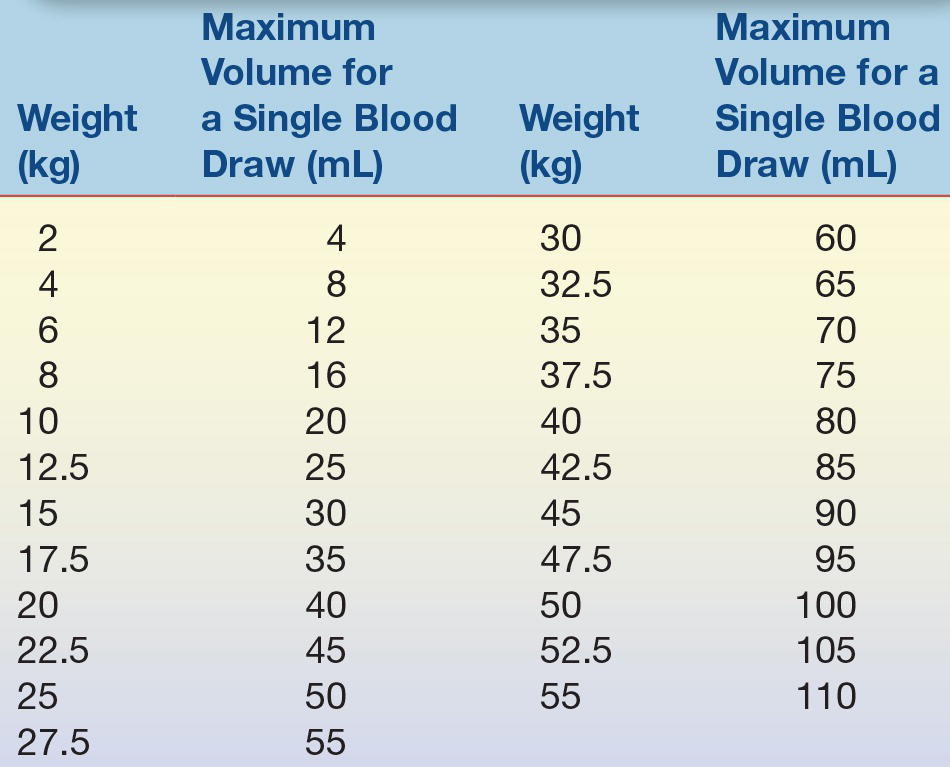
Clinical Chemistry and the Pediatric Patient Basicmedical Key
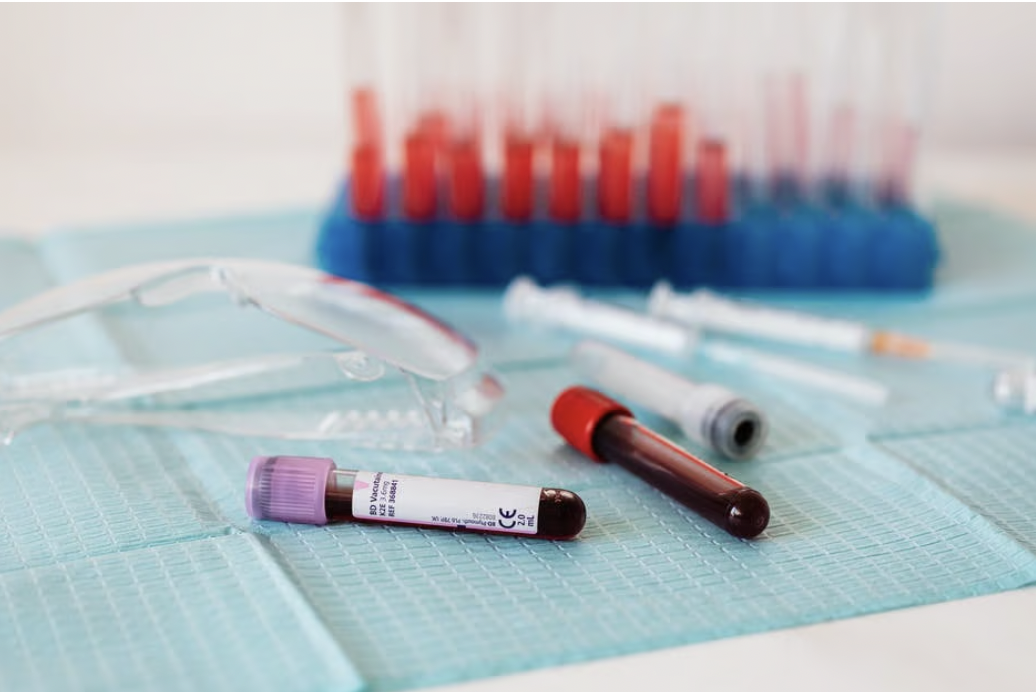
Understanding Proper Pediatric Blood Draw Guidelines and Procedures
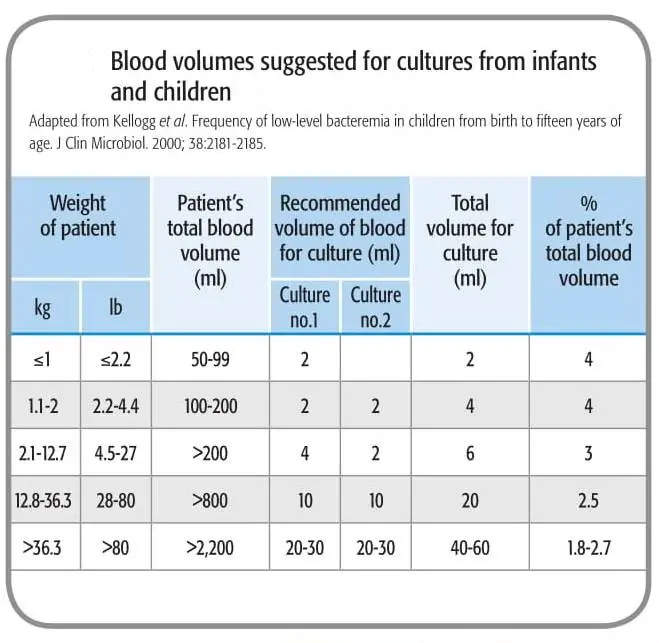
Blood Culture Indications, Timing, and Volume Microbe Online

Pediatric Blood Draw Guidelines Warehouse of Ideas
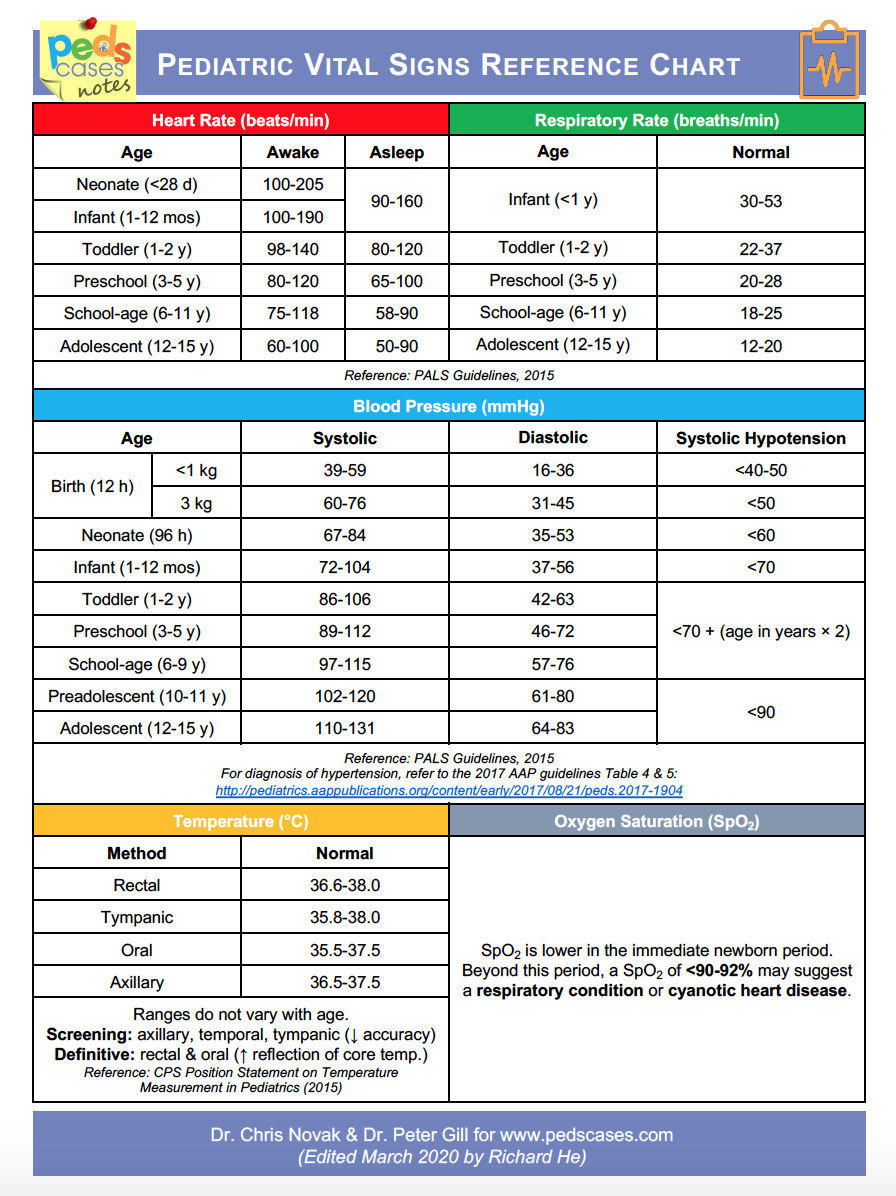
Pediatric Vital Signs Reference Chart PedsCases

order of blood draw tubes chart Corrin Castellanos

How To Do A Pediatric Blood Draw EASY DRAWING STEP

Blood Draw Guidelines Photos Hummingbird Med, Inc.

Pediatric Blood Draws Pediatric Nursing Lecturio Nursing YouTube
Web Following The Proper Pediatric Blood Draw Guidelines And Procedures Is Crucial To Ensure Accurate Test Results While Minimizing Pain And Distress For Young.
Web Time To Conduct The Draw, The Cost Of Equipment To Do The Draw, And Inflexibility To Verify Or Add To The Original Order Without Resticking The Patient Increase At Each Tier.
Web Maximum Allowable Total Blood Draw Volumes In Children.
Web Pediatric Blood Volume Draw Guidance.
Related Post: